

Integrated detection, control, identification, and attack, Longview Aerospace in
Release time:2026-02-09
Reading frequency:
Bird activities in areas such as airports are highly likely to cause flight safety accidents. Traditional bird prevention methods have problems such as slow response, low recognition accuracy, and poor evacuation effectiveness, making it difficult to adapt to modern low altitude safety protection needs. Longview Aerospace relies on technological innovation to create an integrated intelligent Anti-bird system that integrates detection, drive, and management. It integrates multiple core technologies such as radar detection, photoelectric recognition, intelligent drive, and data management to achieve automation, intelligence, and efficiency in Anti-bird work, providing professional bird defense solutions for airports and other scenarios.
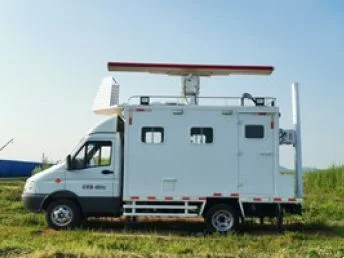
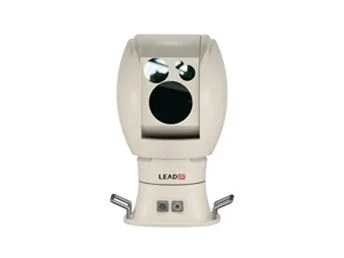
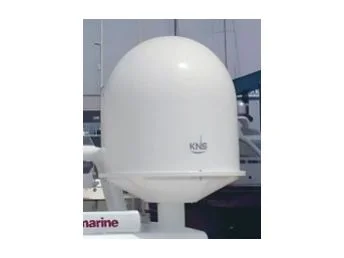
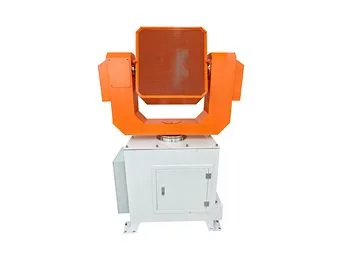
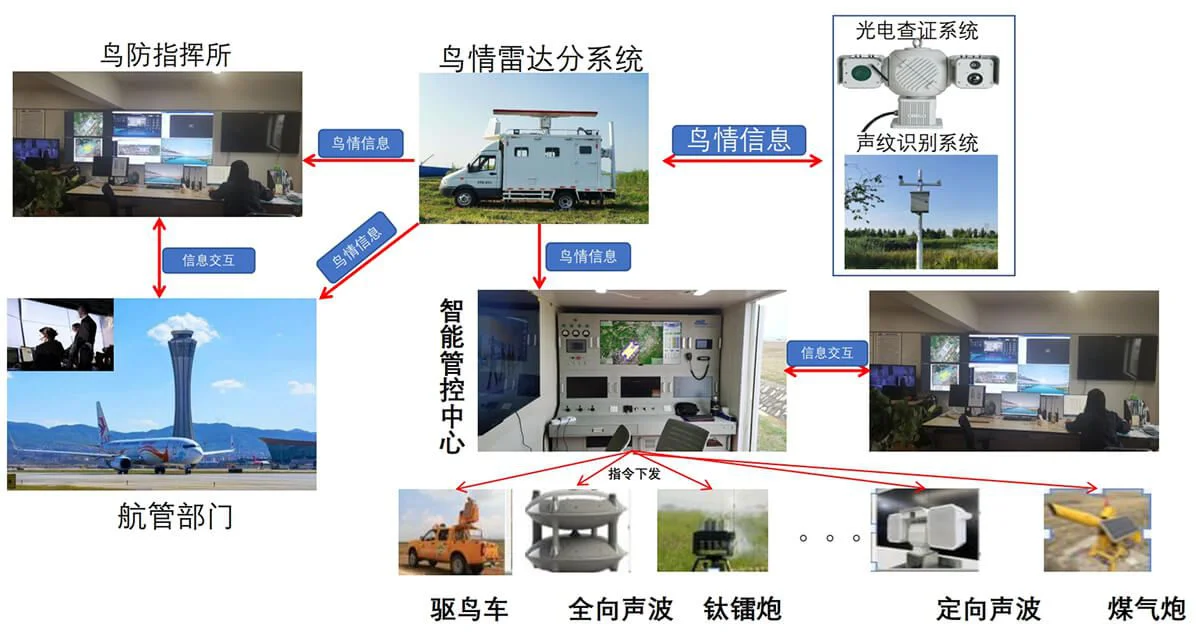
The Longview Aerospace Intelligent Anti-bird System has established a complete operation process, with the bird radar subsystem as the core, capturing the entire range of bird situation information. The recognition is further verified through voiceprint recognition system and photoelectric verification system. All bird situation information is transmitted in real time to the intelligent control center and bird defense command post, while achieving information exchange with the air traffic management department. The control center issues instructions based on bird information, and links various evacuation devices such as directional sound waves, gas cannons, bird repelling vehicles, and omnidirectional sound wave titanium radium cannons to form a multi-dimensional and three-dimensional evacuation system, achieving seamless connection from target detection to instruction execution.
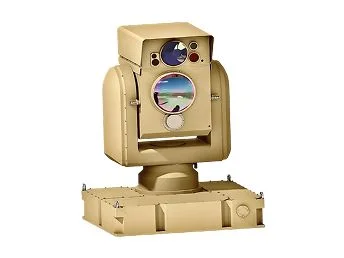
Compared to traditional Anti-bird solutions, the Longview Aerospace Intelligent Anti-bird System has more than ten core technological advantages, which comprehensively improve the efficiency and effectiveness of Anti-bird work. The system has the ability to search for 1000 batches of targets simultaneously, and can guide the strike of 500 dangerous targets. Each strike unit is equipped with gaze+species recognition functions, which is a core advantage that other similar systems do not have. It can accurately distinguish different bird species and develop targeted evacuation strategies. At the same time, the system achieves a 1-second high-speed strike response, and each strike unit has the ability to automatically track and strike. It can also form a network to complete joint strikes on stubborn targets, greatly improving the efficiency of evacuation.
At the level of intelligence, the system introduces advanced artificial intelligence algorithms that can autonomously generate strike strategies, evaluate strike effects in real time, and use relevant data as feeding data to continuously optimize strike strategies and species library information, achieving autonomous updates of precise strike strategies. In addition, the system can automatically generate bird situation reports and strike effectiveness evaluation reports, and provide guiding suggestions to provide data support for the subsequent optimization of bird prevention work, truly achieving "data-driven bird prevention". At the same time, the system supports unmanned automated operations, significantly reducing labor costs and improving the normalization and refinement level of bird prevention work.
A radar system focused on low altitude airspace

-
Telephone:
+86 532 81923330
+86 17863955988
-
Address:
3017, Building D2, Phase II, International Innovation Park, No.1 Keyuan Weiyi Road, Laoshan District, Qingdao City,China
-
Email:
info@longviewaerospace.com
Copyright © Qingdao Longview Aerospace Equipment and Technology Co., Ltd.